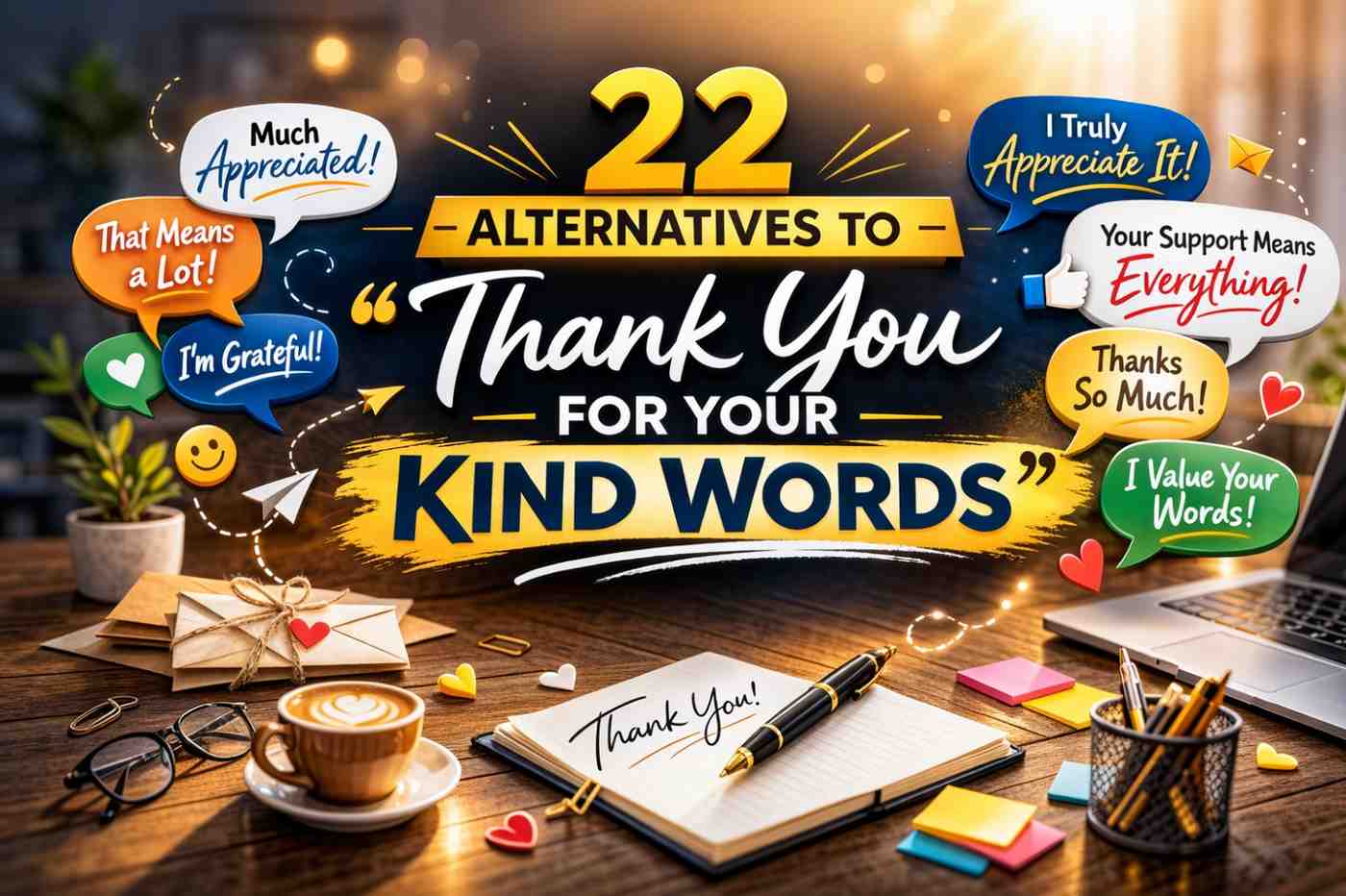
22 Alternatives to “Thank You For Your Kind Words”
Gratitude never goes out of style. One of the most common ways people show it is by saying, “Thank you for your kind words.” It is a polite, safe, and respectful response. Yet, repeating the same phrase can feel dull.
In personal talks, work emails, or social media replies, variety adds warmth. Choosing the right words makes your message more real. That’s why having alternatives to “Thank you for your kind words” matters.
This guide explains what the phrase means, when to use it, and offers 22 alternatives. Each option comes with clear notes on meaning, tone, and best use cases.
What Does “Thank You For Your Kind Words” Mean?
The phrase is a polite way of showing appreciation. It means you recognize and value what the other person said. Their words might have praised, comforted, or supported you.
At its heart, it signals two things: respect for their effort and gratitude for their thoughtfulness.
When & How to Use “Thank You For Your Kind Words”
You can use this phrase in many settings:
- Work emails: After receiving feedback or praise.
- Personal talks: When a friend or family member encourages you.
- Social media: When followers leave supportive comments.
- Public speaking: When acknowledging compliments.
It fits best in formal or polite conversations. But sometimes you may want something warmer, lighter, or more creative. That’s when alternatives are useful.
Check This Out: What Does “Good Luck” Mean? 21 Powerful Alternatives You Can Use
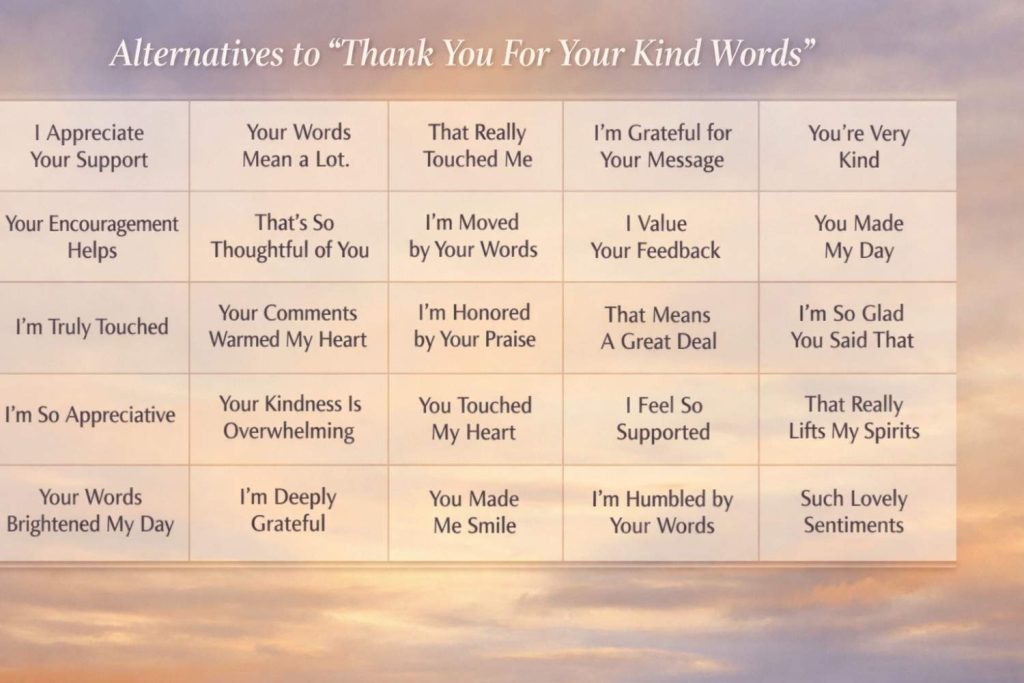
22 Alternatives to “Thank You For Your Kind Words”
Below are 22 alternatives. Each comes with Meaning, Explanation, Example, Best Use, Worst Use, and Tone so you know exactly when to use them.
1. “I Really Appreciate Your Support”
Meaning: Shows deep gratitude.
Explanation: Acknowledges the effort behind their words.
Example: “I really appreciate your support during this project.”
Best Use: Professional settings, teamwork, or leadership roles.
Worst Use: Casual chats where it might feel too formal.
Tone: Warm, respectful, professional.
2. “That Means a Lot to Me”
Meaning: Highlights personal impact.
Explanation: Emphasizes that their words truly touched you.
Example: “That means a lot to me, thank you.”
Best Use: Friends, family, and close colleagues.
Worst Use: Business emails, where it might seem too emotional.
Tone: Personal, heartfelt.
3. “Your Words Brightened My Day”
Meaning: Suggests their kindness lifted your mood.
Explanation: A positive, lighthearted response.
Example: “Your words brightened my day. Thank you!”
Best Use: Casual messages, texts, or social media.
Worst Use: Serious professional settings.
Tone: Cheerful, uplifting.
4. “I’m Grateful for Your Encouragement”
Meaning: Thanks them for motivating you.
Explanation: Recognizes their role in giving you confidence.
Example: “I’m grateful for your encouragement during this time.”
Best Use: Career growth, mentoring, or tough times.
Worst Use: Light compliments like “Nice shirt!”
Tone: Formal, sincere.
5. “That Was Very Thoughtful of You”
Meaning: Praises their kindness.
Explanation: Focuses on the intent behind their words.
Example: “That was very thoughtful of you to say.”
Best Use: Personal and professional settings.
Worst Use: Very casual texts or slang-heavy chats.
Tone: Polite, gentle.
6. “I Truly Value Your Feedback”
Meaning: Thanks them for sharing input.
Explanation: Useful when they’ve given constructive comments.
Example: “I truly value your feedback on my presentation.”
Best Use: Work emails, client relations.
Worst Use: Casual compliments.
Tone: Formal, respectful.
7. “Your Kindness Doesn’t Go Unnoticed”
Meaning: Shows awareness and appreciation.
Explanation: Reassures the speaker that their effort matters.
Example: “Your kindness doesn’t go unnoticed. Thank you.”
Best Use: Personal and team conversations.
Worst Use: Quick, informal chats.
Tone: Warm, sincere.
8. “I’m Touched by Your Words”
Meaning: Expresses emotional impact.
Explanation: Indicates their words made you feel cared for.
Example: “I’m touched by your words of support.”
Best Use: Close relationships or heartfelt moments.
Worst Use: Corporate or technical feedback.
Tone: Emotional, personal.
9. “Thanks for Lifting My Spirits”
Meaning: Their words cheered you up.
Explanation: A casual, friendly way to say thanks.
Example: “Thanks for lifting my spirits today!”
Best Use: Social or casual interactions.
Worst Use: Serious workplace notes.
Tone: Light, upbeat.
10. “I’m Lucky to Have Your Support”
Meaning: Acknowledges gratitude and fortune.
Explanation: Makes the speaker feel valued.
Example: “I’m lucky to have your support during this project.”
Best Use: Work teams, friendships, family.
Worst Use: Short exchanges where it may feel too heavy.
Tone: Warm, appreciative.
11. “Thanks for Being So Thoughtful”
Meaning: Credits their kindness.
Explanation: Recognizes intent as much as words.
Example: “Thanks for being so thoughtful and caring.”
Best Use: Friends, family, close colleagues.
Worst Use: Dry business contexts.
Tone: Friendly, warm.
12. “Your Words Inspire Me”
Meaning: Shows motivation gained from them.
Explanation: Emphasizes their influence.
Example: “Your words inspire me to keep going.”
Best Use: Mentors, leaders, or supporters.
Worst Use: Casual, quick chats.
Tone: Respectful, motivational.
13. “I Can’t Thank You Enough”
Meaning: Strong expression of gratitude.
Explanation: Used when words feel too small to match feelings.
Example: “I can’t thank you enough for your kind words.”
Best Use: Deep, personal moments.
Worst Use: Brief or minor compliments.
Tone: Emotional, sincere.
14. “That Was Very Kind of You”
Meaning: Directly acknowledges kindness.
Explanation: Simple, polite, and flexible.
Example: “That was very kind of you to say.”
Best Use: Everyday conversations, work, and personal.
Worst Use: Rarely misused.
Tone: Neutral, polite.
15. “I’m Encouraged by What You Said”
Meaning: Their words gave you strength.
Explanation: Emphasizes the positive effect.
Example: “I’m encouraged by what you said during the meeting.”
Best Use: Motivational talks, coaching, career feedback.
Worst Use: Light compliments.
Tone: Supportive, professional.
16. “I Appreciate Your Thoughtfulness”
Meaning: Thanks them for caring.
Explanation: A formal yet gentle response.
Example: “I appreciate your thoughtfulness and kind words.”
Best Use: Work or personal messages.
Worst Use: Casual quick texts.
Tone: Polite, warm.
17. “Thanks for Taking the Time to Say That”
Meaning: Recognizes their effort.
Explanation: Polite way to value their thought.
Example: “Thanks for taking the time to say that.”
Best Use: Work or casual notes.
Worst Use: Overly formal settings.
Tone: Friendly, respectful.
18. “Your Support Means Everything Right Now”
Meaning: Stresses importance of their words.
Explanation: Best for emotional or hard times.
Example: “Your support means everything right now.”
Best Use: Close friends, family, tough moments.
Worst Use: Light, routine compliments.
Tone: Emotional, heartfelt.
19. “That’s So Nice of You to Say”
Meaning: Simple acknowledgment.
Explanation: Casual and natural response.
Example: “That’s so nice of you to say, thank you.”
Best Use: Everyday chats.
Worst Use: High-stakes professional emails.
Tone: Casual, light.
20. “Your Words Give Me Strength”
Meaning: Their words empower you.
Explanation: Strong emotional weight.
Example: “Your words give me strength to keep going.”
Best Use: Emotional times, close bonds.
Worst Use: Workplace emails.
Tone: Deep, powerful.
21. “I Value Your Support More Than You Know”
Meaning: Suggests deep appreciation.
Explanation: Adds intensity to gratitude.
Example: “I value your support more than you know.”
Best Use: Friends, mentors, family.
Worst Use: Short chats.
Tone: Heartfelt, emotional.
22. “Thanks for Always Being There”
Meaning: Recognizes consistent support.
Explanation: Focuses on long-term trust.
Example: “Thanks for always being there for me.”
Best Use: Long-standing relationships.
Worst Use: Quick, surface-level talks.
Tone: Loyal, personal.
Simple and Polite Responses to “Thank You For Your Kind Words”
Sometimes, you might be the one receiving thanks. In that case, you’ll need simple responses. Here are a few:
- “You’re welcome.”
- “I’m glad I could help.”
- “It was my pleasure.”
- “Anytime.”
- “Happy to support.”
These replies keep the exchange smooth and polite.
Conclusion
“Thank you for your kind words” is timeless, but using alternatives can add depth and variety. Each option carries a unique tone. Some are formal for work. Others are warm for friends or family. Choosing the right phrase depends on context.
The goal is always the same: to show gratitude. Whether you say, “I really appreciate your support,” or “That means a lot to me,” your words matter. They strengthen bonds, inspire trust, and spread positivity.