21 Alternatives to “Call Me When You Have Time”
We live in a fast-paced world where communication often needs to be quick, clear, and polite. Many people use the phrase “Call me when you have time” to ask for a conversation without sounding demanding. While this phrase is friendly, it can also feel vague or repetitive.
Sometimes, you need sharper alternatives that better fit your tone, situation, or relationship with the person. Using the right wording can make you sound more considerate, professional, or direct.
This guide explains what “Call me when you have time” means, where you can use it, and gives you 21 better alternatives. Each option comes with its meaning, explanation, examples, and best or worst uses. We’ll also share simple responses to this phrase so you’re ready on both sides of the conversation.
What Does “Call me when you have time” Mean?
The phrase means: “I’d like to talk to you, but I don’t want to pressure you.”
It shows you respect the other person’s schedule. It signals patience and politeness, but it doesn’t give urgency or context. This is why many people seek better alternatives.
For example, a boss may not want to use this with an employee if the matter is urgent. A friend might find it casual enough, but a client could view it as unprofessional.
In short, the phrase is polite but sometimes too general.
When & Where to Use “Call me when you have time”
This phrase works in casual and semi-formal settings.
- With friends or family: It shows warmth without pressure.
- With colleagues: It works if the matter is not urgent.
- In customer service or business: It can sound unclear. Clients often prefer precise times.
Avoid it when the situation is urgent or important. Instead, set a specific time, like “Can we talk today at 4 PM?”
Discover More: What Does “Good Luck” Mean? 21 Powerful Alternatives You Can Use
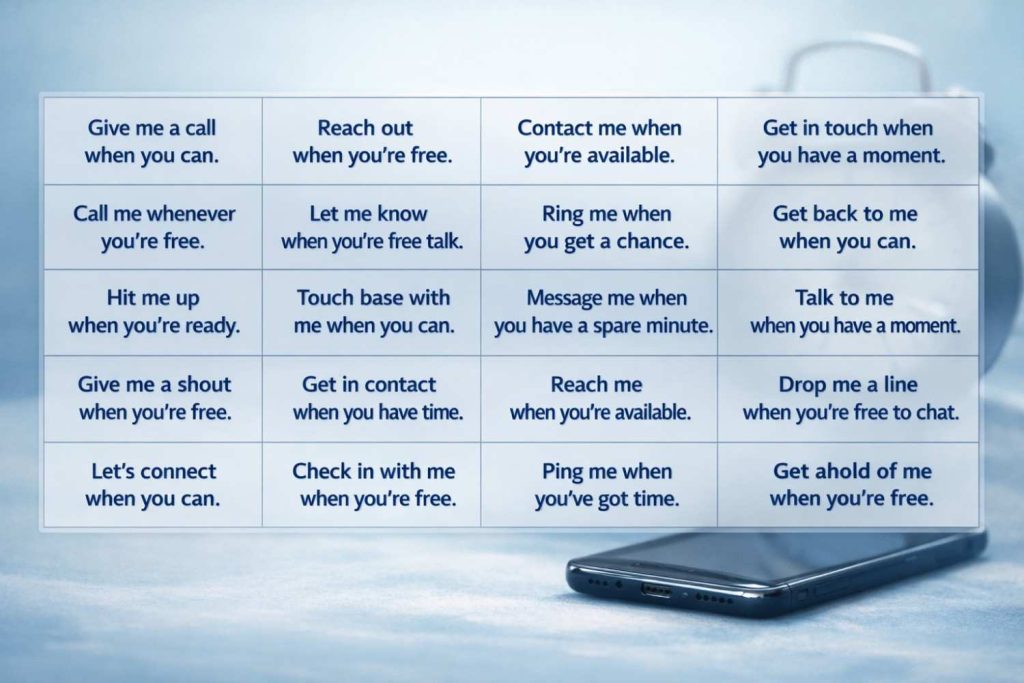
21 Alternatives to “Call me when you have time”
Here are better ways to ask for a call, each broken down into simple points.
1. “Give me a call when you’re free.”
Meaning: A casual way to ask for a call.
Explanation: Similar to the original phrase but slightly friendlier.
Example: “Hey, give me a call when you’re free.”
Best Use: With friends or coworkers in informal chats.
Worst Use: Not ideal for clients.
Tone: Friendly and relaxed.
2. “Let me know when you’re available to talk.”
Meaning: Asking them to pick the right time.
Explanation: Puts the choice in their hands.
Example: “Let me know when you’re available to talk about the report.”
Best Use: Work settings where respect is key.
Worst Use: Too formal for close friends.
Tone: Polite and professional.
3. “Call me whenever you’re not busy.”
Meaning: Shows flexibility.
Explanation: Suggests no rush.
Example: “Call me whenever you’re not busy, no hurry.”
Best Use: Personal chats with friends or family.
Worst Use: Avoid in urgent cases.
Tone: Relaxed and easygoing.
4. “Reach out when you have a moment.”
Meaning: A polite and soft request.
Explanation: Common in professional emails.
Example: “Please reach out when you have a moment to discuss next steps.”
Best Use: Office and business emails.
Worst Use: Rarely used in casual talks.
Tone: Polished and formal.
5. “Call me back at your convenience.”
Meaning: Gives them control of timing.
Explanation: Often used in voicemail.
Example: “This is Sarah, call me back at your convenience.”
Best Use: Professional calls and voicemails.
Worst Use: May sound stiff with friends.
Tone: Respectful and formal.
6. “I’d love to talk when you’re free.”
Meaning: Adds warmth to the request.
Explanation: Combines politeness with friendliness.
Example: “I’d love to talk when you’re free, it’s been a while.”
Best Use: Close friends, family, or casual networking.
Worst Use: Not suitable in strict work settings.
Tone: Warm and friendly.
7. “Let’s catch up when you’re free to talk.”
Meaning: Suggests a friendly chat.
Explanation: Works best for personal conversations.
Example: “Let’s catch up when you’re free to talk this week.”
Best Use: Friends, relatives, or casual colleagues.
Worst Use: Not right for urgent business topics.
Tone: Lighthearted and social.
8. “Ping me when you’re available.”
Meaning: Modern, tech-savvy phrasing.
Explanation: Suits chat or text platforms.
Example: “Ping me when you’re available for a quick call.”
Best Use: Colleagues who use chat apps.
Worst Use: Not ideal for formal emails.
Tone: Informal and casual.
9. “Could you call me when you get a chance?”
Meaning: Adds polite wording.
Explanation: Makes the request sound softer.
Example: “Could you call me when you get a chance?”
Best Use: Work and semi-formal settings.
Worst Use: Not urgent requests.
Tone: Courteous and polite.
10. “Touch base with me when you can.”
Meaning: Business-friendly phrase.
Explanation: Suggests a quick update or chat.
Example: “Touch base with me when you can about the project.”
Best Use: Corporate and professional use.
Worst Use: Too formal for friends.
Tone: Professional.
11. “Drop me a call when you’re free.”
Meaning: Light and casual.
Explanation: Easy phrasing for text messages.
Example: “Drop me a call when you’re free this evening.”
Best Use: Informal chats.
Worst Use: Business emails.
Tone: Casual.
12. “Give me a ring when you get time.”
Meaning: Slightly old-fashioned but warm.
Explanation: Friendly and non-urgent.
Example: “Give me a ring when you get time.”
Best Use: Parents, grandparents, or casual friends.
Worst Use: Corporate contexts.
Tone: Warm and familiar.
13. “Circle back with me when you can.”
Meaning: Business phrase for reconnecting.
Explanation: Often used in meetings and email.
Example: “Circle back with me when you can.”
Best Use: Workplace discussions.
Worst Use: Friends or informal talks.
Tone: Professional.
14. “Call me at a time that works best for you.”
Meaning: Emphasizes flexibility.
Explanation: Gives full control to the other person.
Example: “Call me at a time that works best for you.”
Best Use: Clients or colleagues.
Worst Use: None, unless urgency is needed.
Tone: Respectful.
15. “Let’s schedule a call when you’re free.”
Meaning: Suggests planning ahead.
Explanation: Professional and organized.
Example: “Let’s schedule a call when you’re free.”
Best Use: Work or networking.
Worst Use: Overly formal for friends.
Tone: Professional and proactive.
16. “I’ll be free later, call me if you can.”
Meaning: Offers a time window.
Explanation: Combines flexibility with guidance.
Example: “I’ll be free later, call me if you can.”
Best Use: Friends and colleagues.
Worst Use: Not for urgent talks.
Tone: Casual and polite.
17. “Would you mind calling me when you’re free?”
Meaning: Adds courtesy.
Explanation: Gentle and respectful.
Example: “Would you mind calling me when you’re free?”
Best Use: Formal situations.
Worst Use: Too formal for casual chats.
Tone: Courteous.
18. “Can you give me a quick call when you’re free?”
Meaning: Adds clarity with “quick.”
Explanation: Shows it won’t take much time.
Example: “Can you give me a quick call when you’re free?”
Best Use: Professional and casual talks.
Worst Use: Long discussions.
Tone: Respectful yet efficient.
19. “Let’s talk whenever you have a moment.”
Meaning: Open-ended and easygoing.
Explanation: Suggests no rush.
Example: “Let’s talk whenever you have a moment.”
Best Use: Personal relationships.
Worst Use: Urgent business cases.
Tone: Relaxed.
20. “I’d appreciate a call when you’re available.”
Meaning: Adds gratitude.
Explanation: Shows respect for their time.
Example: “I’d appreciate a call when you’re available.”
Best Use: Clients and managers.
Worst Use: Casual friends.
Tone: Polite and formal.
21. “Whenever you’re ready, give me a call.”
Meaning: Flexible and calm.
Explanation: Suggests no pressure at all.
Example: “Whenever you’re ready, give me a call.”
Best Use: Close friends, family, or relaxed coworkers.
Worst Use: Urgent or business-critical cases.
Tone: Friendly and considerate.
Simple and Polite Responses to “Call me when you have time”
When someone asks you to call, here are good responses:
- “Sure, I’ll call you later today.”
- “Sounds good, when is a good time for you?”
- “I’ll be free this evening, can I call you then?”
- “Got it, I’ll reach out tomorrow.”
- “Okay, I’ll let you know once I’m free.”
These replies show you respect their request while setting expectations.
Conclusion
The phrase “Call me when you have time” is polite, but it can be vague. Choosing the right alternative makes you sound clearer and more professional—or warmer and friendlier, depending on the situation.
Use casual options with friends and family, and professional options with clients and colleagues. If the matter is urgent, skip the vague wording and set a specific time.
Clear, thoughtful communication strengthens relationships, whether personal or professional. The next time you need to ask for a call, you’ll have 21 better ways to say it.