
What Does “Good Luck” Mean? 21 Powerful Alternatives You Can Use
People say “Good luck” every day. You hear it before exams, interviews, matches, and big events. It sounds simple. It feels friendly.
But many beginners ask the same question. What does “Good luck” truly mean? Is it always appropriate? Can you use it in formal settings? Should you choose another phrase instead?
This guide answers all those questions. You will learn the clear meaning of “Good luck.” You will understand when and where to use it. You will also discover 21 better alternatives. Each option includes meaning, explanation, example, best use, worst use, and tone.
This article uses short sentences and clear language. It helps beginners speak with confidence. It also improves your communication skills in work and daily life.
What Does “Good Luck” Mean?
“Good luck” means you wish someone success.
You hope things go well for them. You want them to achieve their goal. You show support before an important event.
The phrase focuses on luck. It suggests that chance may play a role in the result. It does not promise success. It simply expresses goodwill.
People use it before:
- Exams
- Interviews
- Competitions
- Presentations
- Performances
- New beginnings
In simple words, “Good luck” means:
“I hope everything goes well for you.”
When & Where to Use “Good Luck”
You can use “Good luck” in many situations. It fits casual and semi-formal settings.
Here are common examples:
- Before a job interview
- Before a test or exam
- Before a sports match
- Before a public speech
- Before a big meeting
- When someone starts a new job
It works best when someone faces a challenge. It shows encouragement.
However, you should avoid it in some cases. For example, do not use it when skill matters more than chance. In professional environments, some people prefer phrases that focus on effort instead of luck.
Always consider context. In business settings, phrases like “All the best” or “Wishing you success” may sound stronger and more professional.
Check This Out: What Does “Please See Attached” Mean? 21 Better Alternatives for Emails
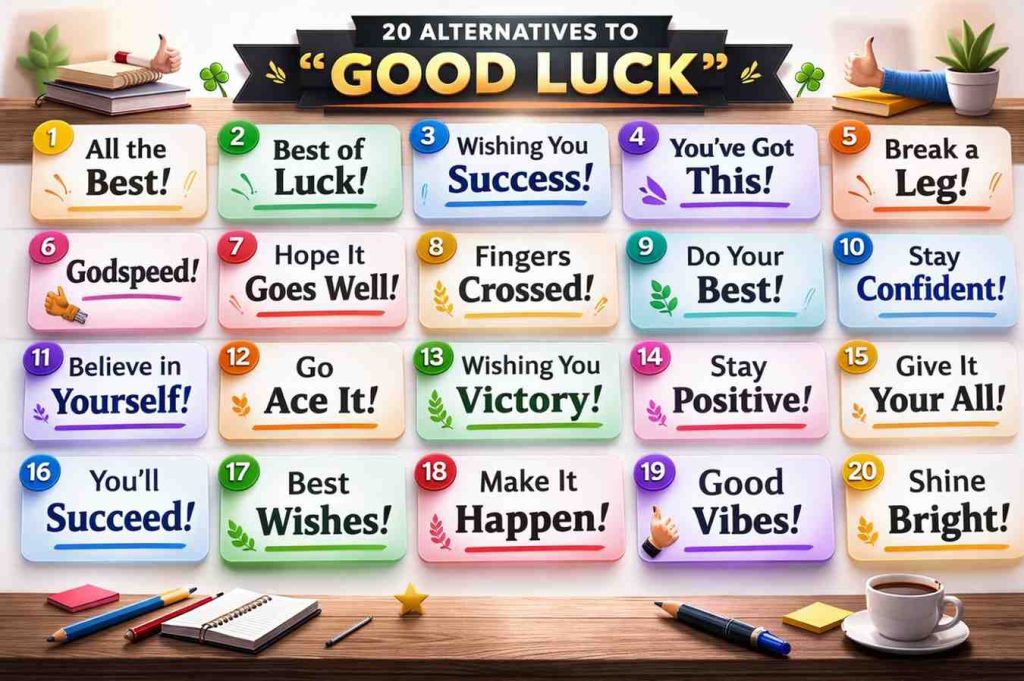
21 Alternatives to “Good Luck”
Below are 21 useful alternatives. Each one serves a different purpose. Choose the one that matches your situation.
1. All the best
Meaning: Wish someone success.
Explanation: Strong and professional alternative.
Example: “All the best for your presentation.”
Best Use: Interviews, meetings, exams.
Worst Use: Casual jokes.
Tone: Supportive and confident.
2. Best of luck
Meaning: Wish someone very good luck.
Explanation: Slightly more enthusiastic than “Good luck.”
Example: “Best of luck in your finals.”
Best Use: Academic or career goals.
Worst Use: Very formal legal writing.
Tone: Warm and encouraging.
3. You’ve got this
Meaning: Express confidence in someone’s ability.
Explanation: Focuses on skill instead of luck.
Example: “You’ve prepared well. You’ve got this.”
Best Use: Friends, coworkers, team members.
Worst Use: Formal emails to senior management.
Tone: Motivational and friendly.
4. Wishing you success
Meaning: Hope someone achieves their goal.
Explanation: Professional and direct.
Example: “Wishing you success in your new role.”
Best Use: Business communication.
Worst Use: Casual chat between friends.
Tone: Formal and respectful.
5. Fingers crossed
Meaning: Hope for a positive outcome.
Explanation: Informal and lighthearted.
Example: “Fingers crossed for your results.”
Best Use: Friends and family.
Worst Use: Corporate presentations.
Tone: Casual and hopeful.
6. I’m rooting for you
Meaning: Actively support someone.
Explanation: Shows emotional backing.
Example: “I’m rooting for you in the finals.”
Best Use: Sports, competitions.
Worst Use: Formal business deals.
Tone: Warm and supportive.
7. Go for it
Meaning: Encourage action and confidence.
Explanation: Pushes someone to take bold steps.
Example: “Go for it. You are ready.”
Best Use: Personal goals, creative work.
Worst Use: Serious legal matters.
Tone: Energetic and motivating.
8. Knock them dead
Meaning: Perform extremely well.
Explanation: Informal expression.
Example: “Knock them dead in your audition.”
Best Use: Performances and creative fields.
Worst Use: Serious professional settings.
Tone: Playful and bold.
9. Do your best
Meaning: Encourage maximum effort.
Explanation: Focuses on effort, not luck.
Example: “Just do your best in the exam.”
Best Use: Students and team members.
Worst Use: High-stakes negotiations.
Tone: Practical and steady.
10. Shine bright
Meaning: Encourage someone to show their talent.
Explanation: Positive and uplifting.
Example: “Shine bright in your performance.”
Best Use: Creative or social events.
Worst Use: Strict corporate emails.
Tone: Cheerful and inspiring.
11. Make it count
Meaning: Use the opportunity wisely.
Explanation: Encourages focus and purpose.
Example: “You worked hard. Make it count.”
Best Use: Sports, exams, big meetings.
Worst Use: Casual daily tasks.
Tone: Serious and motivating.
12. Show them what you can do
Meaning: Prove your ability.
Explanation: Builds confidence.
Example: “Show them what you can do in the interview.”
Best Use: Job interviews, competitions.
Worst Use: Formal reports.
Tone: Encouraging and confident.
13. I wish you well
Meaning: Hope things go positively.
Explanation: Gentle and sincere.
Example: “I wish you well in your new journey.”
Best Use: Farewells, career changes.
Worst Use: Casual texting.
Tone: Polite and thoughtful.
14. Hope everything goes smoothly
Meaning: Wish for no problems.
Explanation: Focuses on ease and stability.
Example: “Hope everything goes smoothly tomorrow.”
Best Use: Events and travel.
Worst Use: Competitive sports hype.
Tone: Calm and supportive.
15. Stay confident
Meaning: Encourage self-belief.
Explanation: Focuses on mindset.
Example: “Stay confident during your speech.”
Best Use: Public speaking, interviews.
Worst Use: Casual greetings.
Tone: Strong and positive.
16. Give it your all
Meaning: Put full effort into something.
Explanation: Encourages dedication.
Example: “Give it your all in the match.”
Best Use: Sports and challenges.
Worst Use: Simple daily tasks.
Tone: Motivating and intense.
17. I believe in you
Meaning: Express trust in someone’s ability.
Explanation: Builds emotional strength.
Example: “I believe in you. You can do it.”
Best Use: Close relationships.
Worst Use: Formal corporate emails.
Tone: Deep and encouraging.
18. May the odds be in your favor
Meaning: Wish for favorable outcomes.
Explanation: Playful and dramatic.
Example: “May the odds be in your favor today.”
Best Use: Informal or fun settings.
Worst Use: Serious professional meetings.
Tone: Light and dramatic.
19. Wishing you the very best
Meaning: Strong supportive wish.
Explanation: More formal than “Good luck.”
Example: “Wishing you the very best in your new job.”
Best Use: Business or formal communication.
Worst Use: Quick casual chats.
Tone: Professional and warm.
20. Go smash it
Meaning: Perform exceptionally well.
Explanation: Modern and informal phrase.
Example: “Go smash it in your exam.”
Best Use: Young audiences and friends.
Worst Use: Corporate boardrooms.
Tone: Energetic and bold.
21. Success is yours
Meaning: Express strong confidence in success.
Explanation: Powerful motivational phrase.
Example: “Stay focused. Success is yours.”
Best Use: Motivational talks and coaching.
Worst Use: Light casual conversations.
Tone: Inspirational and strong.
Responses to “Good Luck”
When someone says “Good luck,” respond politely. Keep it short and natural.
Here are simple responses beginners can use:
- “Thank you.”
- “Thanks, I appreciate it.”
- “That means a lot.”
- “I’ll do my best.”
- “I hope so too.”
- “Thanks, I feel ready.”
- “I appreciate your support.”
These replies show gratitude. They also keep the conversation smooth and respectful.
Conclusion
“Good luck” remains one of the most common supportive phrases in English. It shows kindness and encouragement. It works in many daily situations.
Still, you can improve your communication by using alternatives. Some phrases sound professional. Others feel casual or motivational. The right choice depends on your setting and relationship.
If you speak in a workplace, choose formal options like “Wishing you success.” If you talk to friends, try “You’ve got this.”
Clear language builds confidence. Strong communication builds trust. Now you know the meaning, correct usage, and 21 better alternatives to “Good luck.” Use them wisely and speak with purpose.