
What Does “Have A Good Day” Mean? 21 Better Alternatives for Every Situation
“Have a good day” is one of the most common phrases in English. You hear it in shops, offices, schools, and phone calls. People use it at the end of conversations. It sounds simple. It sounds polite.
But many beginners wonder what it truly means. Is it formal? Is it friendly? Can you use it in business emails? Should you say something else instead?
This guide answers all those questions. You will learn the exact meaning of “Have a good day.” You will also see when and where to use it. Then you will discover 21 better alternatives. Each option includes meaning, explanation, example, best use, worst use, and tone.
This article uses clear and simple language. It helps beginners speak with confidence.
What Does “Have A Good Day” Mean?
“Have a good day” means you wish someone a pleasant and positive day.
You want them to feel happy. You want things to go well for them. You hope they enjoy their time after the conversation ends.
It works as a polite closing phrase. People say it when they leave or end a call. It shows kindness and respect.
The phrase does not promise anything. It simply expresses goodwill.
In short, it means:
“I hope your day goes well.”
When & Where to Use “Have A Good Day”
You can use this phrase in many situations. It fits both formal and informal settings.
Here are common places where people use it:
- At the end of a customer service interaction
- After buying something in a store
- At the end of a work email
- When leaving the office
- After a phone call
- When saying goodbye to friends
It works best in polite conversations. It suits workplaces, schools, and daily life.
However, you should avoid it in serious or emotional situations. For example, do not use it during bad news or difficult discussions. It may sound careless.
Always match your tone to the situation.
Discover More: What Does “Good Luck” Mean? 21 Powerful Alternatives You Can Use
21 Alternatives to “Have A Good Day”
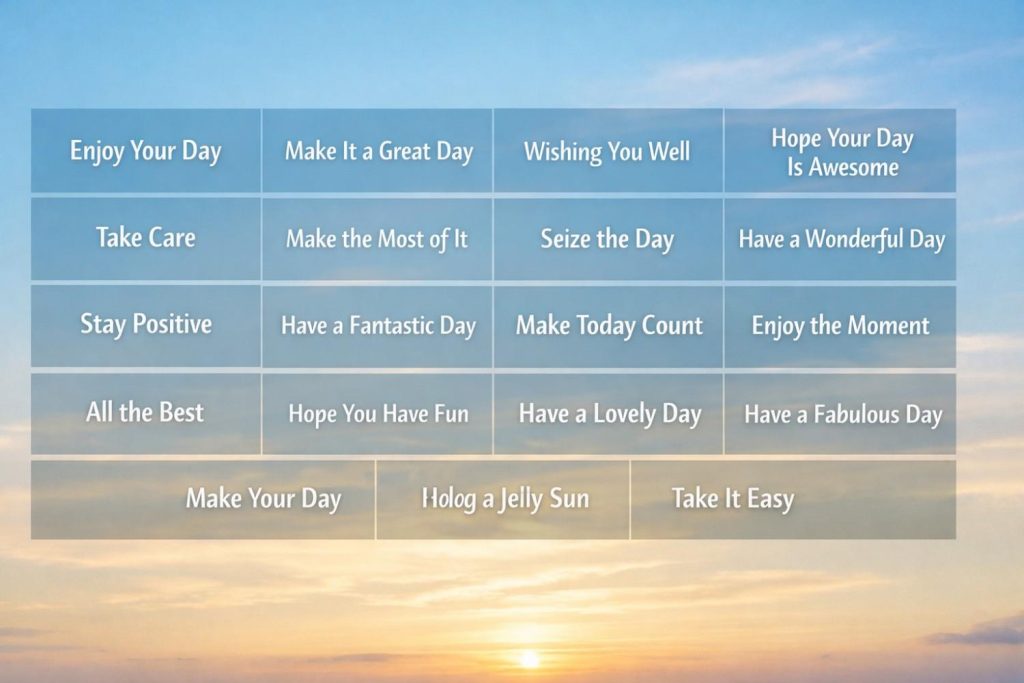
Here are 21 alternatives. Each one serves a different purpose. Choose based on context and tone.
1. Have a great day
Meaning: Wish someone an excellent day.
Explanation: Stronger and more enthusiastic than “good.”
Example: “Thanks for your help. Have a great day!”
Best Use: Friendly emails, customer service, casual chats.
Worst Use: Serious or sad situations.
Tone: Positive and energetic.
2. Have a wonderful day
Meaning: Wish someone a very pleasant day.
Explanation: Sounds warm and thoughtful.
Example: “It was nice meeting you. Have a wonderful day.”
Best Use: Hospitality, polite business emails.
Worst Use: Fast or rushed conversations.
Tone: Warm and kind.
3. Enjoy your day
Meaning: Encourage someone to enjoy their time.
Explanation: Focuses on enjoyment instead of luck.
Example: “You deserve a break. Enjoy your day.”
Best Use: Friends, coworkers, casual emails.
Worst Use: Very formal letters.
Tone: Friendly and relaxed.
4. Hope you have a good one
Meaning: Wish someone a good day or time.
Explanation: Informal and natural in speech.
Example: “Talk later. Hope you have a good one.”
Best Use: Text messages, close colleagues.
Worst Use: Formal writing.
Tone: Casual and easygoing.
5. Take care
Meaning: Wish someone safety and well-being.
Explanation: Shows concern and warmth.
Example: “Drive safe. Take care.”
Best Use: After meaningful conversations.
Worst Use: Quick store transactions.
Tone: Caring and sincere.
6. All the best today
Meaning: Wish someone success.
Explanation: Focuses on achievement.
Example: “Good luck in your interview. All the best today.”
Best Use: Exams, meetings, events.
Worst Use: Normal daily goodbye.
Tone: Supportive and encouraging.
7. Have a productive day
Meaning: Wish someone a successful workday.
Explanation: Work-focused phrase.
Example: “We’ll speak tomorrow. Have a productive day.”
Best Use: Office settings.
Worst Use: Relaxed social chats.
Tone: Professional and focused.
8. Have a pleasant day
Meaning: Wish someone a calm and nice day.
Explanation: Slightly formal.
Example: “Thank you for calling. Have a pleasant day.”
Best Use: Customer service.
Worst Use: Close friends.
Tone: Polite and professional.
9. Have a nice day
Meaning: Simple polite wish.
Explanation: Very common and neutral.
Example: “Here’s your receipt. Have a nice day.”
Best Use: Retail, short interactions.
Worst Use: Deep personal talk.
Tone: Neutral and polite.
10. See you soon
Meaning: Expect to meet again soon.
Explanation: Focuses on future meeting.
Example: “Meeting adjourned. See you soon.”
Best Use: Ongoing relationships.
Worst Use: One-time encounters.
Tone: Friendly and confident.
11. Catch you later
Meaning: Informal goodbye.
Explanation: Casual and relaxed.
Example: “I’ll call tonight. Catch you later.”
Best Use: Friends.
Worst Use: Formal office emails.
Tone: Very casual.
12. Wishing you a great day ahead
Meaning: Hope the coming hours go well.
Explanation: Common in emails.
Example: “Looking forward to your reply. Wishing you a great day ahead.”
Best Use: Professional emails.
Worst Use: Quick spoken chat.
Tone: Polite and respectful.
13. Have an amazing day
Meaning: Wish someone an exciting day.
Explanation: Strong emotional tone.
Example: “You’ve worked hard. Have an amazing day!”
Best Use: Friends, positive events.
Worst Use: Formal reports.
Tone: Cheerful and enthusiastic.
14. Have a blessed day
Meaning: Wish spiritual well-being.
Explanation: Often used in religious settings.
Example: “God bless you. Have a blessed day.”
Best Use: Faith-based communities.
Worst Use: Secular corporate settings.
Tone: Spiritual and warm.
15. Enjoy the rest of your day
Meaning: Focus on remaining time.
Explanation: Used mid-day.
Example: “Thanks for coming in. Enjoy the rest of your day.”
Best Use: Afternoon conversations.
Worst Use: Early morning greetings.
Tone: Friendly and thoughtful.
16. Have a good one
Meaning: Short version of “Have a good day.”
Explanation: Informal and flexible.
Example: “I’ll email you later. Have a good one.”
Best Use: Casual settings.
Worst Use: Formal documents.
Tone: Relaxed.
17. Take it easy
Meaning: Relax and avoid stress.
Explanation: Encourages calmness.
Example: “Don’t overwork. Take it easy.”
Best Use: Friends or close coworkers.
Worst Use: Professional meetings.
Tone: Casual and friendly.
18. Stay safe
Meaning: Wish safety.
Explanation: Often used during travel or bad weather.
Example: “The roads look wet. Stay safe.”
Best Use: Risk situations.
Worst Use: Normal daily goodbye.
Tone: Concerned and caring.
19. Have fun
Meaning: Encourage enjoyment.
Explanation: Light and positive.
Example: “Enjoy the party. Have fun!”
Best Use: Social events.
Worst Use: Work emails.
Tone: Playful.
20. Until next time
Meaning: Goodbye for now.
Explanation: Suggests future contact.
Example: “Thanks for your support. Until next time.”
Best Use: Regular meetings or content creators.
Worst Use: Emergency conversations.
Tone: Warm and steady.
21. I hope your day goes well
Meaning: Direct expression of goodwill.
Explanation: Clear and sincere.
Example: “You’ve got a busy schedule. I hope your day goes well.”
Best Use: Personal conversations.
Worst Use: Fast transactions.
Tone: Genuine and thoughtful.
Responses to “Have A Good Day”
When someone says “Have a good day,” you should reply politely. Short responses work best.
Here are simple answers beginners can use:
- “Thank you, you too.”
- “Thanks, I will.”
- “I appreciate that.”
- “Same to you.”
- “Thanks, have a great one.”
These responses show respect. They also keep the conversation smooth.
Conclusion
“Have a good day” is a simple and powerful phrase. It shows kindness. It ends conversations politely. It works in many daily situations.
Still, you do not need to use the same phrase every time. English offers many alternatives. Some sound formal. Others sound friendly or casual. Choose the right one for your situation.
When you match tone and context, your communication improves. You sound natural. You sound confident.
Now you know the meaning, correct usage, and better alternatives. Use them wisely. Speak clearly. And always end your conversations with genuine goodwill.